The last thing your customers need is a maze of phone trees followed by a 20-minute hold. Yet for years, that’s exactly what many call centers have delivered.
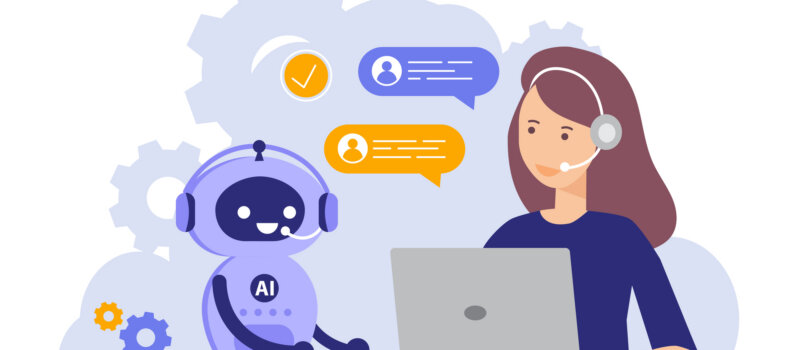
AI-integrated call centers aim to fix that issue, and others plaguing the contact center industry, through a suite of tools such as generative AI, Natural Language Understanding (NLU), and intelligent automation, all working alongside human agents to resolve issues faster and smarter. Critically, AI doesn’t replace your people; it just removes the tedious parts while empowering your agents to do the work only they can do.
In the rest of this article, you’ll discover:
- How AI call centers work and how software layers into the customer experience
- Why more and more businesses are choosing to shift
- What real implementation of agent-AI hybrid systems looks like with Intermedia AI Agent Assist
- How these tools measure success and improve systems beyond the call
How an AI Call Center Works In Practice
Intelligent Call Routing
AI call center automation with Intermedia Unite goes beyond traditional IVR trees, rule-based bots, and “click 3 to talk to an agent” approaches, and it all starts with Speech-to-Text (STT), which converts spoken language into structured, machine-readable data in milliseconds.
That raw text then passes to Natural Language Understanding (NLU), which interprets intent (Is the caller frustrated? Confused? Ready to cancel?) and extracts the meaning behind the words.
Next, a generative AI decision engine evaluates that intent against customer history, product data, and business rules to determine the best action. The response is then delivered through Text-to-Speech (TTS) in a natural, conversational voice.
When a situation exceeds the AI’s scope, intelligent redirection routes the caller to the right human agent with full context already loaded for the agent’s convenience. That ensures that your agent doesn’t need to ask for tedious repetition.
Real-Time Agent Assistance During the Call
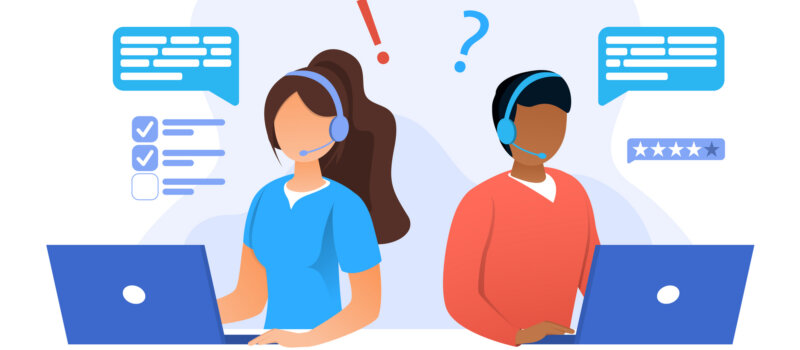
Intermedia AI agent assist supports your agents mid-call, letting an expert sit in with them for every interaction.
During a live call, we surface relevant knowledge-base articles, product specs, or pricing details the moment a topic is detected in the conversation. That means agents stop fumbling through tabs and start responding with confidence, which in turn makes things easier for overstressed agents (and more fluid for your customers).
And, when the call is over? Automated call summaries cut the tedium out of notetaking and reports, allowing your agents to focus on their job while still producing clean, easily audited data trails to track progress and highlight areas for improvement.
Continuous Learning with AI Supervisor Insights and Call Summaries
Finally, every interaction feeds a continuous learning loop. We mentioned already that calls are automatically logged, summarized, and analyzed for ongoing improvement, which can save agents 5 to 10 minutes per call.
Even before that point though, AI-powered sentiment analysis monitors tone and language in real time, flagging calls that are trending negative before a customer reaches their breaking point. Supervisors receive alerts and can intervene proactively to recover the interaction.
All in all, that means every dropped conversation leads to natural improvement with minimal tedium, keeping your team on top of things.

Using AI Automation to Minimize Agent Fatigue
We’ve gone over the basics of how AI can work hand-in-hand during customer-agent interactions to make the process simpler, but there are also instances in which AI tools and agents can work separately for maximum efficiency (yet without competing with one another); that change is paving the way for changes in call center operations in the modern day.
A common pattern in support operations is that roughly 80% of inbound contacts involve routine, repeatable requests: order status, password resets, billing questions, basic troubleshooting, etcetera. Intermedia’s AI-powered contact center suite automates that majority, clearing away junk from human queues. What remains for live agents is the complex, high-stakes 20%, i.e. contract disputes, complicated issues, and escalating conversations where human judgement is necessary.
Automated handling reduces Average Handling Time (AHT) on routine cases, while human agents freed from repetitive work deliver more attentive service on complex cases. Both quantity and quality improve simultaneously with AI integration.
Future-Proof Your Customer Operations with Intermedia
The shift toward AI-first call centers is already happening, and teams moving early are building competitive advantages.
The good news? It’s easier than you think to get started with the new paradigm.
Intermedia Unite takes automation, AI-integration, customer data, email exchange, and other communications and keeps them in a single, robust, commercial-grade software suite designed for maximum convenience and power.
On top of that, you’ll benefit from our industry experts, personalized onboarding, software training, and ongoing technical support. After all, why should you have to figure it out on your own? Intermedia takes the guesswork away from your communication stack, and between our cloud-hosted services and a 99.999% annual uptime SLA guarantee, you can be confident your AI-powered call center is ready to meet customer demand any time, any where.
No costly hardware renovations, no on-premises PBX, just robust software that scales with your headcount and needs. Contact us today to see how.
Deepan Hari
Deepan is the Director of Product Marketing for Intermedia's Archiving solution.
October 15, 2026
Explore other posts on these topics: AI